

If it hasn’t sunk in by Friday night, you definitely feel it Saturday morning… a slight pang of disappointment that KFest is almost over. I’ve heard more than one person say that this year’s event seemed to fly by (as it always does). Most of us are exhausted from too little sleep but every person I’ve asked has told me they’ve had a great time and plan to come back next year. The sessions have been great, but it’s the people you get to hang out with that make this fun and worthwhile. Thanks everyone for making the 19th annual KansasFest such an enjoyable experience.
Saturday doesn’t have much on the schedule, but it’s one of the most important days of the conference. HackFest officially ends, vendors and programmers usually announce their new products and we all get to eat BBQ for dinner.
Ryan demonstrated “IItter” (too-ter) a freeware Twitter client that he wrote. Twitter is a micro-blogging social service that let’s friends “follow” each other, and keep in touch without resorting to instant messaging or e-mail. IItter requires an Apple IIGS with System 6.0.1, Marinetti, and an Ethernet card with a broadband internet connection. An accelerator is also recommended. Or, you can just use Sweet16.
Geoff Weiss reintroduced a new HASH tool for the IIGS. No offense to Geoff, but I fell asleep due to sleep deprivation, NOT because it was boring. I’m afraid I missed most of the presentation. Whoops!
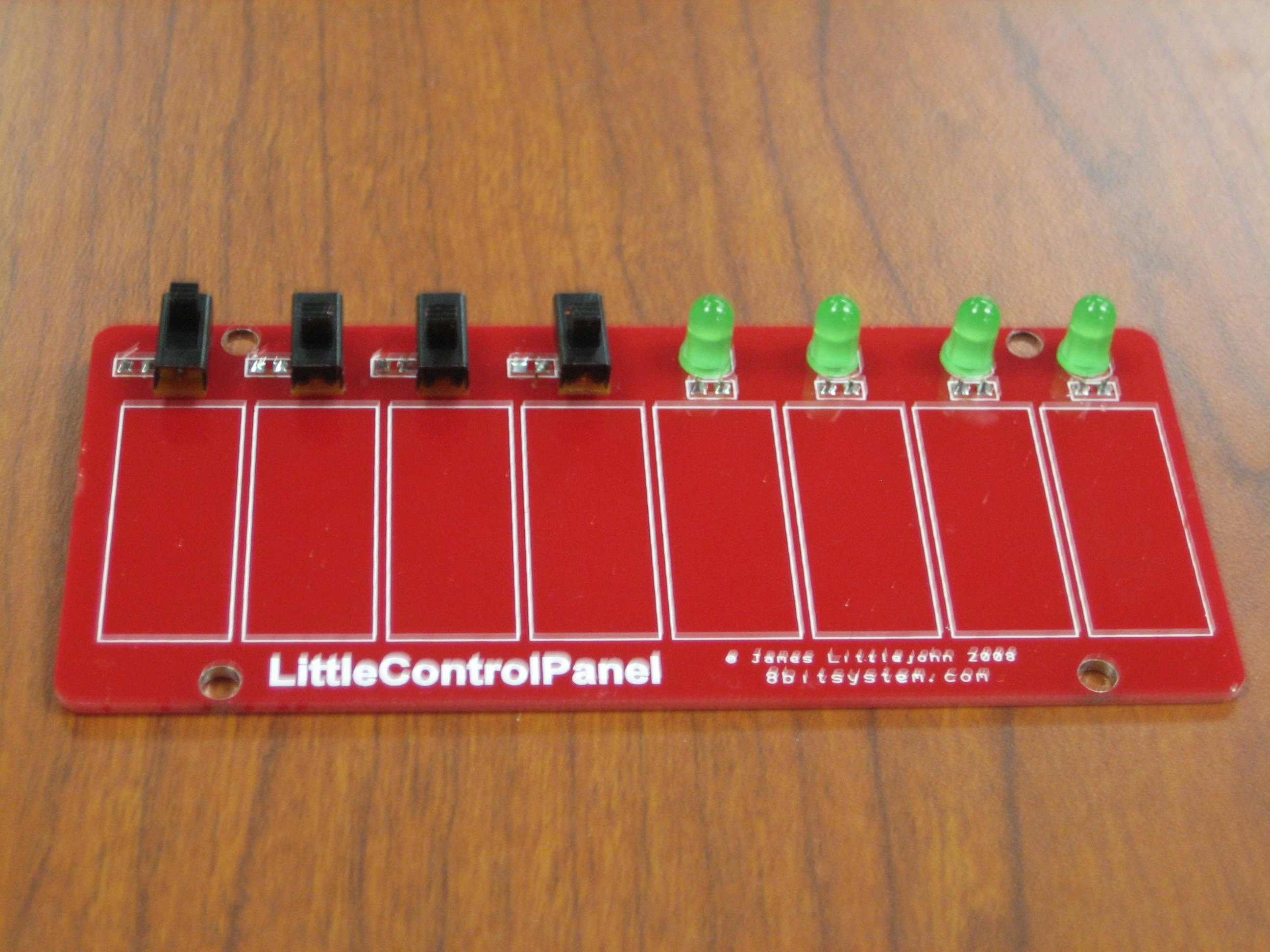
Next on the agenda was James Littlejohn who announced a few new expansion and enhancement products. First up, the LittleControlPanel…

Â
The LittleControlPanel is simply a set of 4 switches and 4 LEDs to control internal devices like ReactiveMicro’s ROM switchers, or for toggling off the speaker, etc. The LEDs can be connected to internal cards like the CFFA, Zip/Transwarp or any card with visual indicators that you wish to move to the outside of the case where you can actually SEE THEM without leaving the case off.
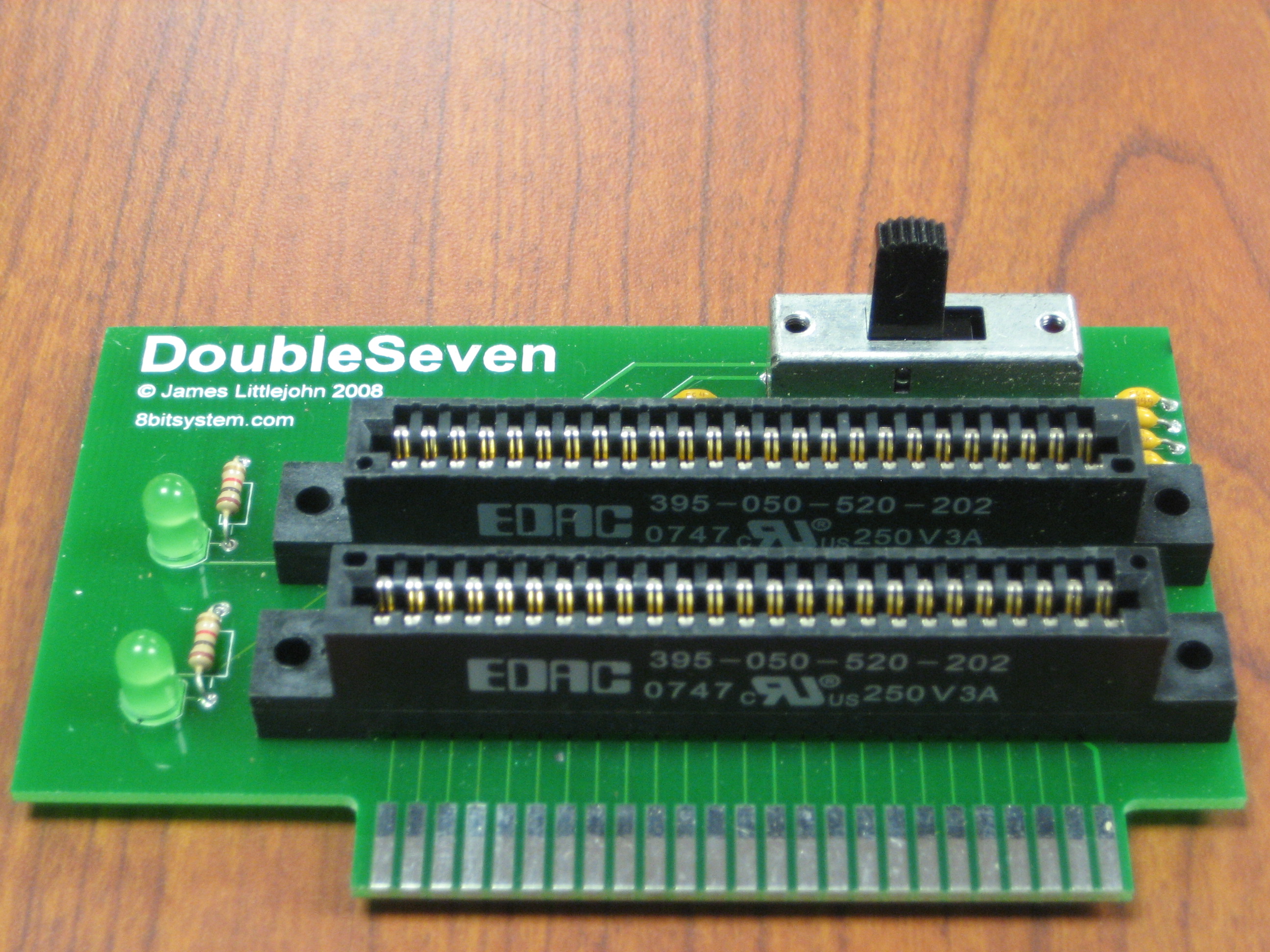
Next we have the DoubleSeven, a card that creates a switchable slot 7 in your Apple //e, II+ or II. Have a card you don’t use very often? You can leave it in the machine, and switch to it when you want to use it. You’ll have to power off the machine first to make the switch, as it’s NOT a hot-swap card.

The LittleExpanderPlus is a clone of the SCRG Switch-a-Slot, but with a major improvement. It includes an integrated LittlePower adapter, making this an INTERNAL Switch-a-Slot! The LittleExpanderPlus is designed to replace the standard Apple power supply in the Apple //e or II+, and provides 4 switchable slots that are interfaced via a BussTap. The BussTap is typically installed in slot 1, 4, or 7. Again, this isn’t a hot-swap device. You must power off the Apple II before switching cards (just like the original Switch-a-Slot). The LittleExpanderPlus can also be used externally or placed in an enclosure so IIGS users can utilize it as well. You’ll still need a power supply; either an external PSU or better yet, a micro-ATX PSU for an all-internal solution.
And then there is the Extend-a-Slot thingy… a single slot, on a cable with a BussTap on one end that can be used externally. Developers often use these to save wear and tear on an internal slot. Sorry, I didn’t get a picture of that.
All of these products (and more) will be available soon from ReactiveMicro. The LittleControlPanel will sell for $15 and the DoubleSeven for $65. Pricing for the LittleExpanderPlus has not yet been set, but it will cost less than the $180 of the original SCRG Switch-a-Slot. No price on the Extend-a-Slot yet either. James Littlejohn also let us know he’s far from done, and will be working to bring us more Apple II products in the future.
Ken Gagne announced that the Esprit de Apple Corps collection compiled by Russell Nielson is now freeware. Esprit de Apple Corps is a two-disc set of multimedia files specifically for the Apple II and contains over 4,500 MOD song files, 10,000 graphic files, games, sounds, and more.
More good news from Ken, Juiced.GS will continue to be published in 2009. You can renew your subscription here.
Ken then surprised us with a demonstration of Facebook, and told us of the “Apple II Enthusiasts” group located there.
HackFest finished with two qualified entries. Margaret Anderson programmed a Hypercard stack she titled “Game Menu”, and Ryan Suenaga produced an CDA named “Bitly”. Margaret’s stack launches games (or any application) configured within the stack. Ryan’s program submits the contents of the IIGS clipboard to the Bit.ly service and fetches a shortend URL. After reviewing both entries, our judges named Ryan’s Bitly program the winner.
Later in the afternoon, we had the vendor fair. The new hardware products announced by James Littlejohn seemed to be getting a lot of buzz. I picked up a couple of DoubleSeven cards, a LittleProto II and a few other parts.
The only thing left was the trip out to KC Masterpiece for BBQ, and then it was back to the dorms for more chatting, visiting and last minute hacking. Some of us are leaving early, and are already packed or in the process of preparing for departure. We’ve already started saying our goodbyes.